
Can Art Exist Without Meaning?
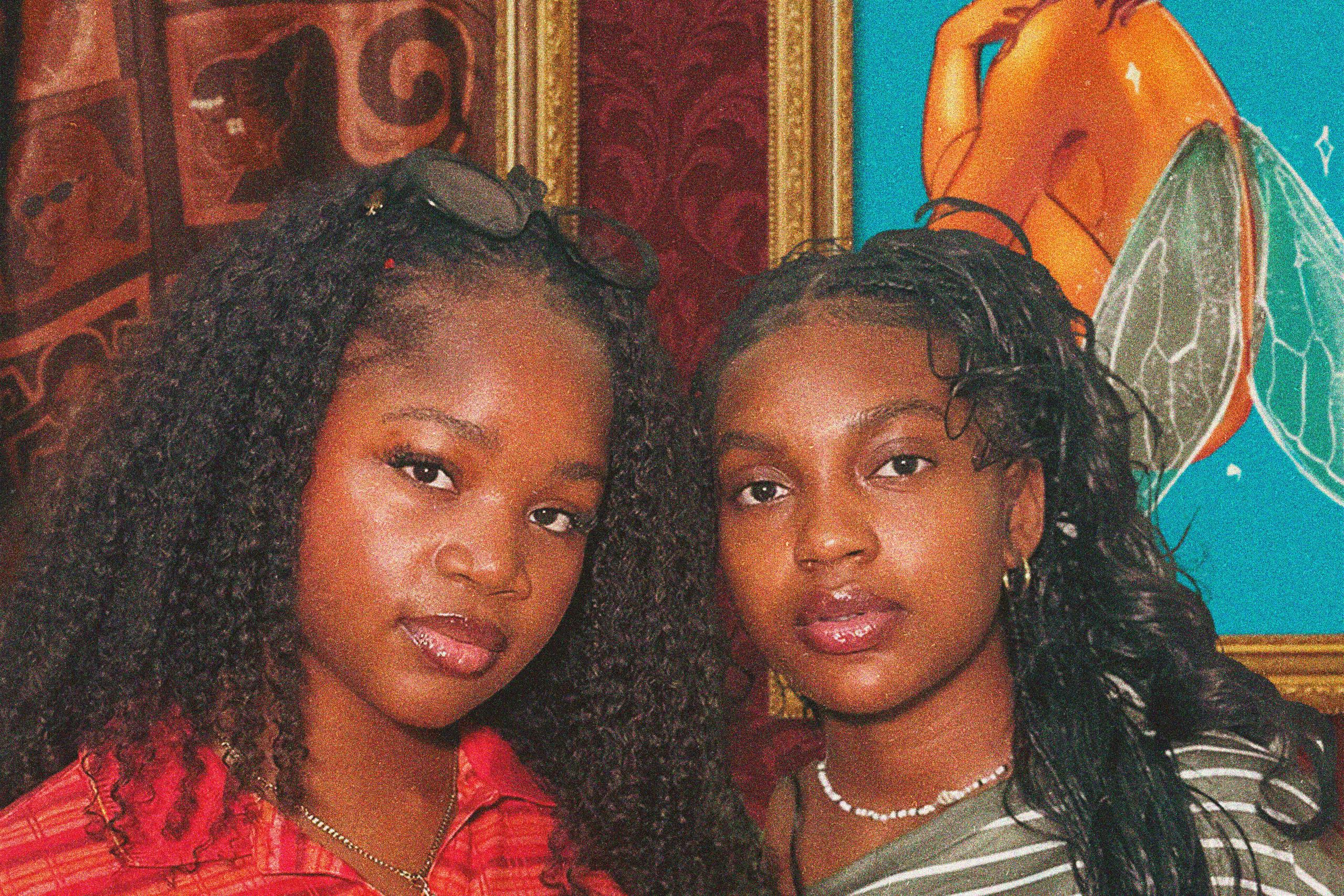
For Jacinta and Kevwe, creativity is not just about the lines, colours, and scribblings on a canvas or within a digital workspace. It is also about creating spaces where people can express, experience, and connect through art.
The world today is filled with an enormous amount of art, not just by talented artists, but also in nature. Everywhere around you, art finds its way into even the most mundane things, and every single piece of art seems to have been made for specific reasons, to tell specific stories; even the most banal natural art seems to always say something or tell particular stories.
Jacinta Chisom, professionally known as Art by Jacinta, and Ogini Oghenekevwe, also known as Dfuture Arts, spoke with The Community about why they do not necessarily try to force narratives into their work. Instead, they create art that leaves room for audiences to arrive at their own personal and unique interpretations.
So, can one piece of art tell multiple stories?
“Honestly, I want people to feel whatever they want to feel,” Kevwe laughs. “I don’t want to put anyone in a box or make it seem like the painting has to mean the same thing to everyone. For me, it’s all about sparking emotion, whatever that might be.
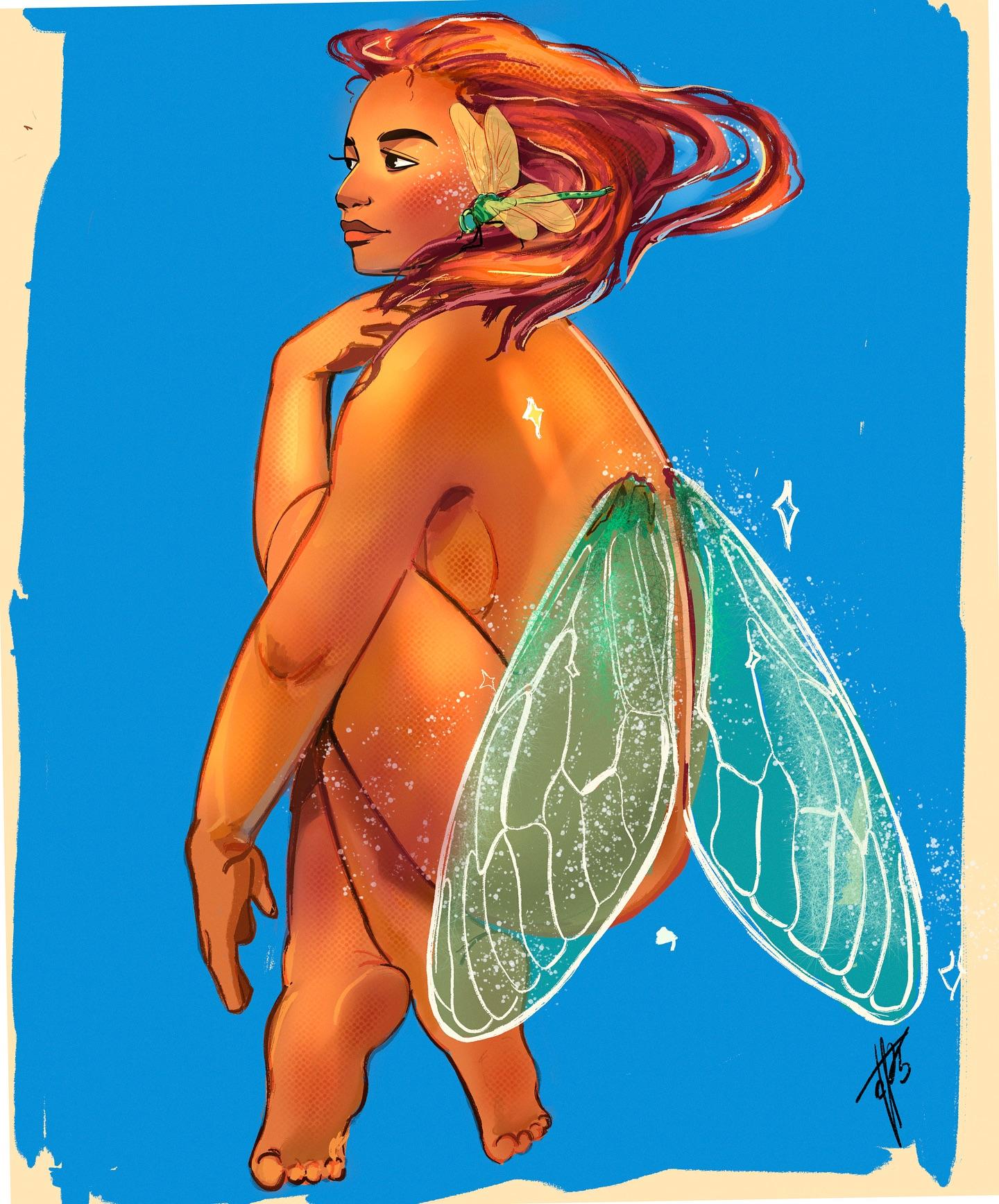
“I’ll give an example. I had an exhibition a while back, and I had a couple of paintings on display, but there was this one called Fairy Talks. My interpretation of that piece was way different from how everyone else saw it, and that’s exactly what I’m trying to achieve. I’m just trying to evoke an emotion in you. I’m trying to make you create a story from what you are seeing.”
So, is the art really meaningless?
“Not at all,” Kevwe explains. “I want everyone to find their own meaning. No forced narratives, no pressure, just honest reactions.”That openness is echoed in the conversation around Jacinta’s work as well. Her practice demonstrates how personal experiences can become visual narratives without necessarily prescribing how audiences should receive them.
For her, trying to cram stories or deep messaging into every piece can sometimes feel performative and restrictive, like being confined to a corner.
“...So I don’t always tell stories with all my work because sometimes art is unserious for me,” Jacinta explains to The Community. “Creating art is a form of escape for me, so it doesn’t necessarily always have to be something serious. I don’t like the whole ‘being put in a box’, or being that artist that has to chase a particular political narrative or something constantly. Sometimes it’s just very passive.
“But when I’m telling a story, I try to communicate a clear message to people.
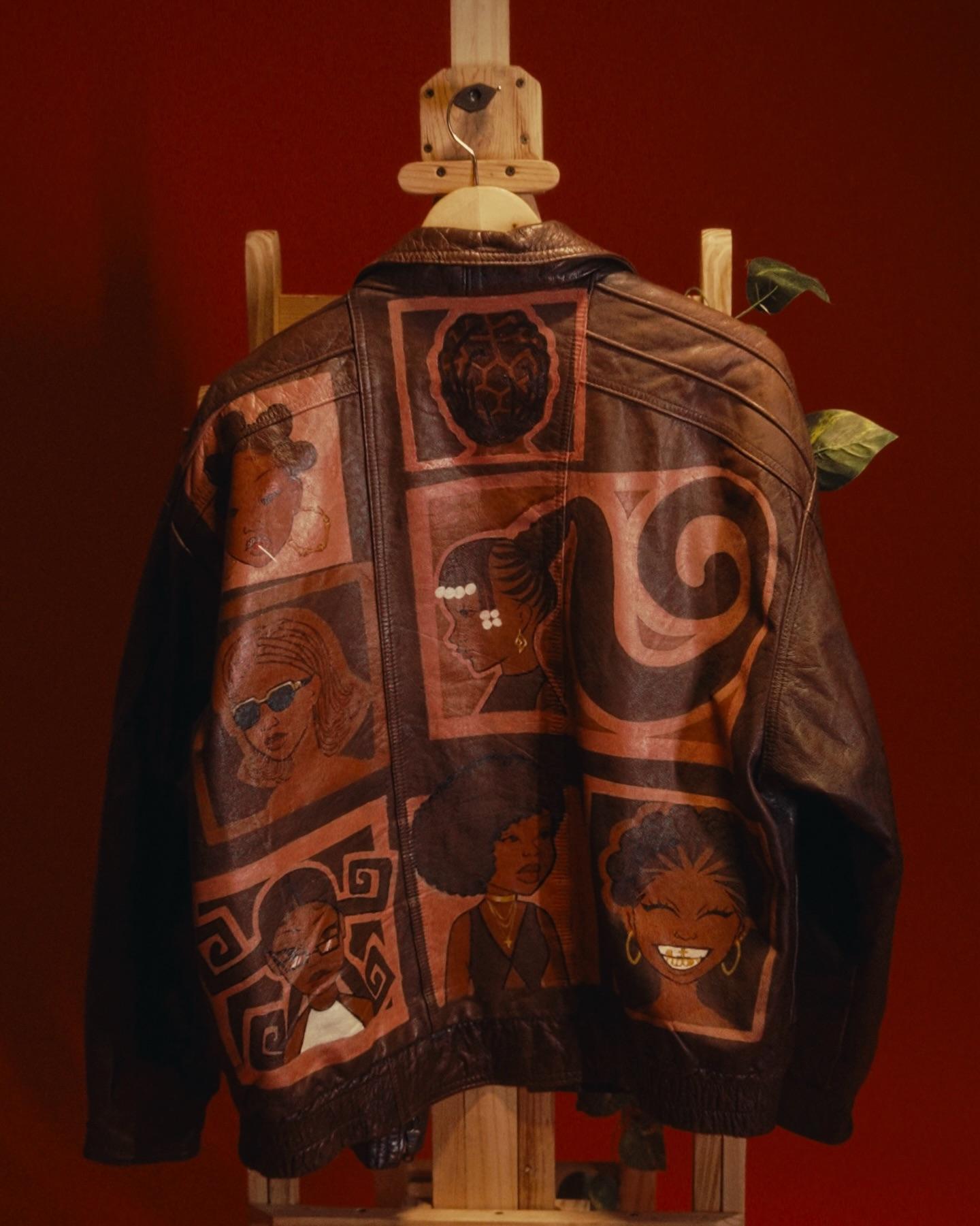
“Like the jacket I painted, that was about the history behind our hair as African women. I tried to spotlight seven Black women with different hairstyles from different parts of Africa.
“You can still see those forms [hairstyles] today, through ponytails or curly hair. But that was what that was about; I was trying to showcase that this is how it has been and this is how it’s going to continue to be because it’s deeply rooted in our culture.
“So culture, I would say, is one of the things I try to express in my art.
“And then also, there’s a sense of identity, because I take a lot of inspiration from myself as an individual. Most of my artworks feature Black people, women, or maybe even a short person; I don’t know. But most of the inspiration is from me and my personal experiences.
“So I think the emotion I want people to feel when they see my art is more of relatability, like, ‘Oh, I see myself in this painting,’ or, ‘I identify with this particular piece.’ ”
“We want you to feel something first, then conclude what it means to you later.”
To them, art isn’t necessarily about explanations. It can be serious, whimsical, or whatever the viewer wants it to be. The real magic happens in the process of creating the piece, and again in the moment when the viewer gets to decide what it means to them.
When Art Becomes Wearable
The boundaries between their art and fashion are equally fluid.
Jacinta’s work, titled “The Roots I Carry,” extended beyond the traditional canvas through a brown leather jacket painted with the artwork. The decision transformed the piece into something functional and wearable, an artwork that could leave the exhibition space and accompany its wearer into the world.
Kevwe explored a similar idea through an original scarf featuring her artwork. Producing the scarf introduced an entirely different side of the creative process, including considerations around manufacturing and supply chains. More importantly, it demonstrated how artwork can become a functional object that people can interpret through the way they wear and style it.
For Jacinta, fashion remains an evolving part of her practice. While her current focus is on traditional painting and artwork, she is experimenting with crafts such as bag-making and sees future collaborations in fashion as a natural progression.
The relationship makes sense. Both art and fashion provide ways of communicating identity without necessarily relying on words.
Javwe Studios: Finding Community in Creating
Javwe Studios is a creative hub co-founded by the two artists and built around a simple question: what if we could find a way to get people off their screens, out of their houses, and basically get them to touch grass, or in this case, art supplies?
The artists came together to use the one power they both wield in common: creativity. Their goal is to take people on a trip down memory lane, back to their childhood art and craft classes.
“Javwe Studios is a combination of both our names, Jacinta and Kevwe,” Kevwe explains. “The core of what we’re doing is basically building community, a creative club where you step away from your laptop or workspace, from your comfort zone, and you step into a different area where you can use your hands.
“It’s very hands-on. We didn’t want to do the traditional ‘take a pencil and draw’ or ‘paint.’ We wanted to take everybody back to when they started creating, that initial love that you had for creating.
“You know how a lot of people would say, ‘Oh, I used to be an art child,’ or ‘I used to be into art, but I grew out of it’? But before all of that happened, there was a period in your life where you were so happy to get your hands dirty and create something.
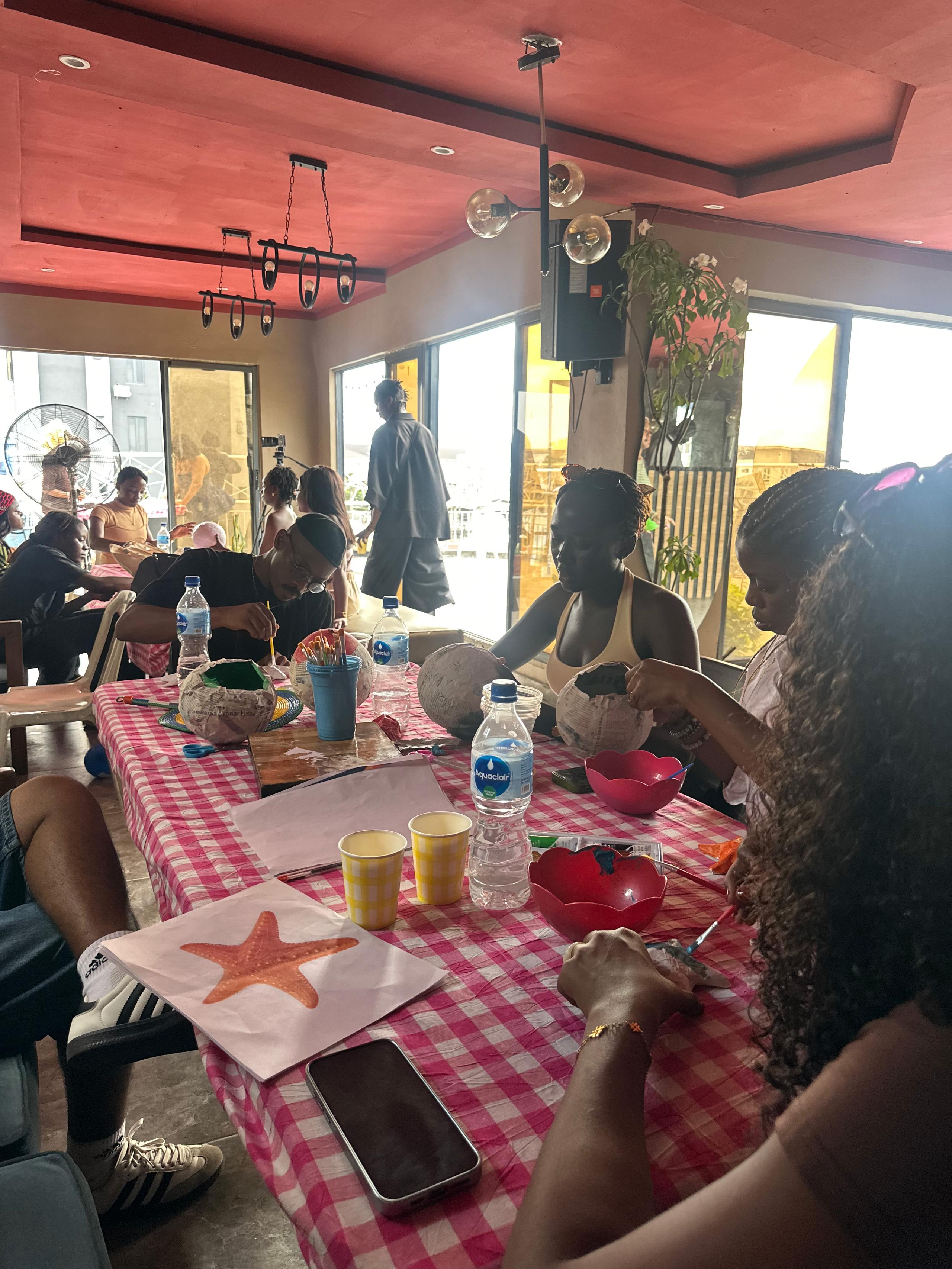
“So we want to take everybody back in time, take you back to when you were in primary and nursery school, when you made papier-mâché, when you made clay, when you used cardboard to make characters. Basically, your art and craft class back then, before life came in and took that joy away from you.
“We want people to have that feeling again. Our one rule: don’t come with the mindset that you have to be great at this.
“You might have forgotten how to create. That’s fine. That’s not what we want. We don’t want you to be the best artist. We don’t want you to be the best creative. We want you to come and have fun and connect with people who share the same joy.
“So what Javwe Studios is doing is basically building a community of creatives and non-creatives, strangers and friends alike, coming together to have a good time, have a good laugh, work with their hands and, you know, communicate, share ideas, get inspiration, talk to and meet new people. Yeah, it’s more like a creative club.
“It’s basically all about the experience, not just the experience of creating the artworks, but also the experience of the space that we are putting you in.
“So that’s why we have this idea of moving the experience to different places. The last one we did was on a rooftop. We wanted everybody to have that feeling, you know, on a calm Sunday evening. You’re on a rooftop, the wind in your hair, enjoying the sunset, having brunch or a cocktail, and creating art.
“That’s a very peaceful setting, and that’s what we’re trying to evoke in people.
“So aside from the art, we also want to refresh your mind and make you fall in love again with those things that you used to love back in the day.”
Perhaps this is where the work of Jacinta and Kevwe ultimately converges. Whether they are illustrating characters, painting garments, or bringing people together, their practices are increasingly concerned with the same question: what happens when creativity becomes something people can experience, participate in, and carry with them?